
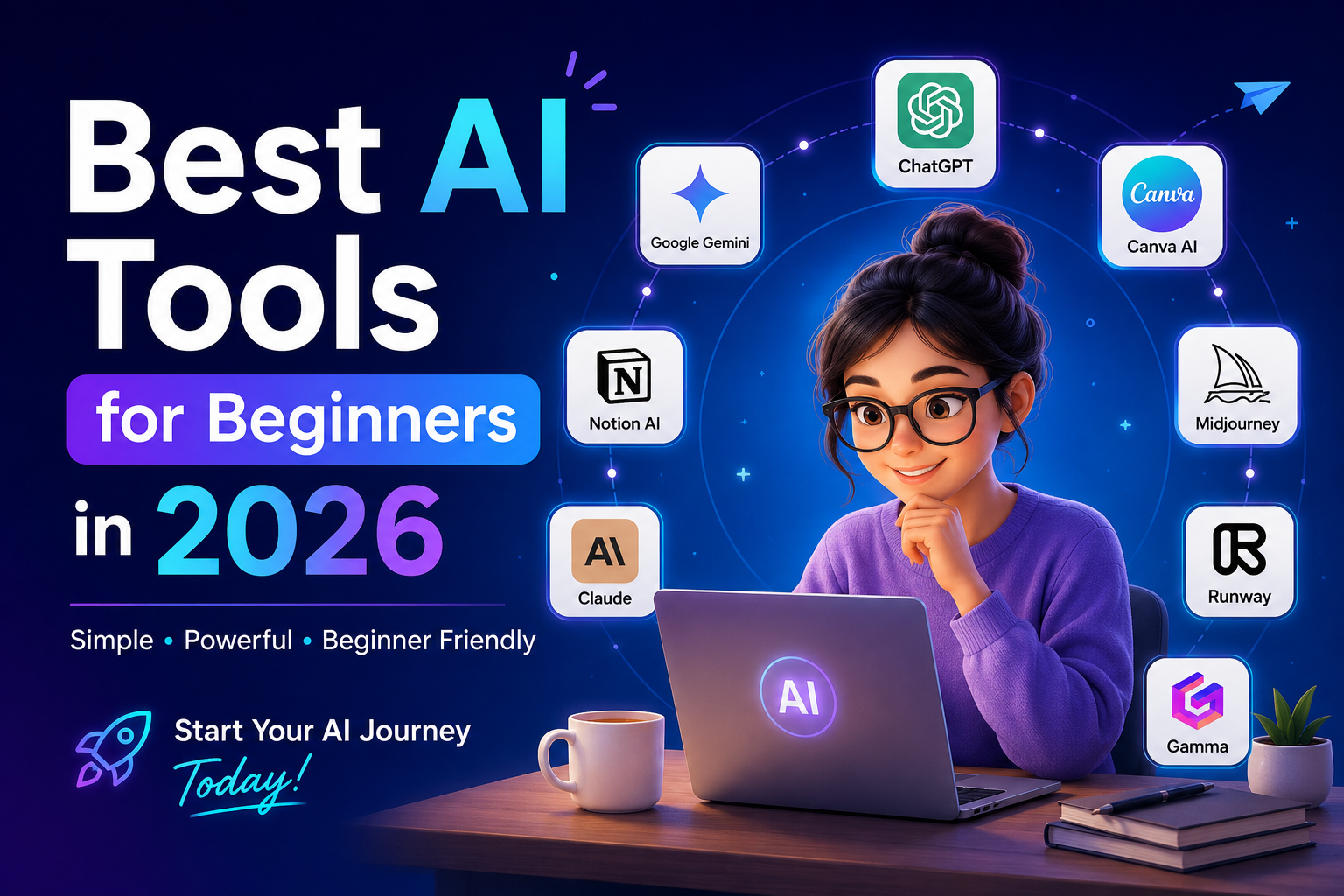
Artificial Intelligence is no longer just for developers or tech experts. In 2026, AI tools have become simple enough for students, freelancers, marketers, business owners, content creators, and even complete beginners. Whether you want to write blogs, create social media posts, design graphics, generate videos, build websites, or automate repetitive tasks, there’s an AI tool that can help. In this guide, we’ll explore the best AI tools for beginners in 2026, what they do, and why they’re worth trying. Why Beginners Should Start Using AI AI can help you: The best part? Most tools offer free plans to get started. 1. ChatGPT Best For Writing, brainstorming, coding, research, and everyday productivity. Features Pros Free Plan Yes 2. Google Gemini Best For Research and Google Workspace users. Features Pros 3. Claude AI Best For Long-form writing and document analysis. Features Why Beginners Love It Claude explains complex topics in simple language. 4. Canva AI Best For Graphic design without design skills. Features Perfect For 5. Microsoft Copilot Best For Office productivity. Features Ideal for professionals already using Microsoft Office. 6. Grammarly AI Best For Writing improvement. Features Perfect for students and professionals. 7. Notion AI Best For Note-taking and organization. Features Great for managing both personal and work projects. 8. Perplexity AI Best For Research with citations. Features Ideal for students and researchers. 9. Midjourney Best For AI image generation. Features Great for creators who want professional-quality artwork. 10. Adobe Firefly Best For Commercial image creation. Features Excellent for designers and marketers. 11. Runway ML Best For AI video editing. Features Perfect for YouTubers and content creators. 12. Pika Labs Best For Creating AI videos from text. Features 13. ElevenLabs Best For AI voice generation. Features Perfect for YouTube creators and podcasters. 14. Gamma Best For Creating presentations. Features No PowerPoint skills required. 15. Cursor AI Best For Beginner programmers. Features Makes learning programming much easier. Comparison Table Tool Best For Free Plan ChatGPT Writing & Productivity ✅ Gemini Research ✅ Claude Long Documents ✅ Canva AI Design ✅ Microsoft Copilot Office Work ✅ Grammarly Writing ✅ Notion AI Notes Limited Perplexity Research ✅ Midjourney Images ❌ Adobe Firefly Design Limited Runway Video Limited Pika AI Videos Limited ElevenLabs Voice Limited Gamma Presentations ✅ Cursor Coding ✅ Which AI Tool Should You Choose? Choose based on your needs: Students Content Creators Digital Marketers Business Owners Developers Tips for Beginners Frequently Asked Questions (FAQs) Which AI tool is easiest for beginners? ChatGPT is generally the easiest AI tool to start with because of its simple chat interface and wide range of capabilities. Are AI tools free? Many AI tools offer free plans with limited usage. Premium subscriptions unlock advanced features, higher limits, and better models. Can beginners use AI for business? Yes. AI can help with marketing, customer support, content creation, presentations, and automation, making it valuable for businesses of all sizes. Do I need coding skills to use AI tools? No. Most modern AI tools are designed with user-friendly interfaces that require little to no technical knowledge. Which AI tool is best for content creation? A combination of ChatGPT for writing, Canva AI for graphics, Runway ML for video editing, and ElevenLabs for voiceovers provides a powerful content creation workflow. Final Thoughts AI has become an essential skill in 2026, and getting started is easier than ever. Whether you’re a student, freelancer, marketer, entrepreneur, or hobbyist, these beginner-friendly tools can help you work faster, spark creativity, and automate everyday tasks. Start with ChatGPT, Canva AI, and Perplexity AI to build a strong foundation. As your confidence grows, you can explore advanced tools for image generation, video creation, coding, and business automation. By learning just a few of these tools today, you’ll be better equipped to stay productive and competitive in the AI-driven future.
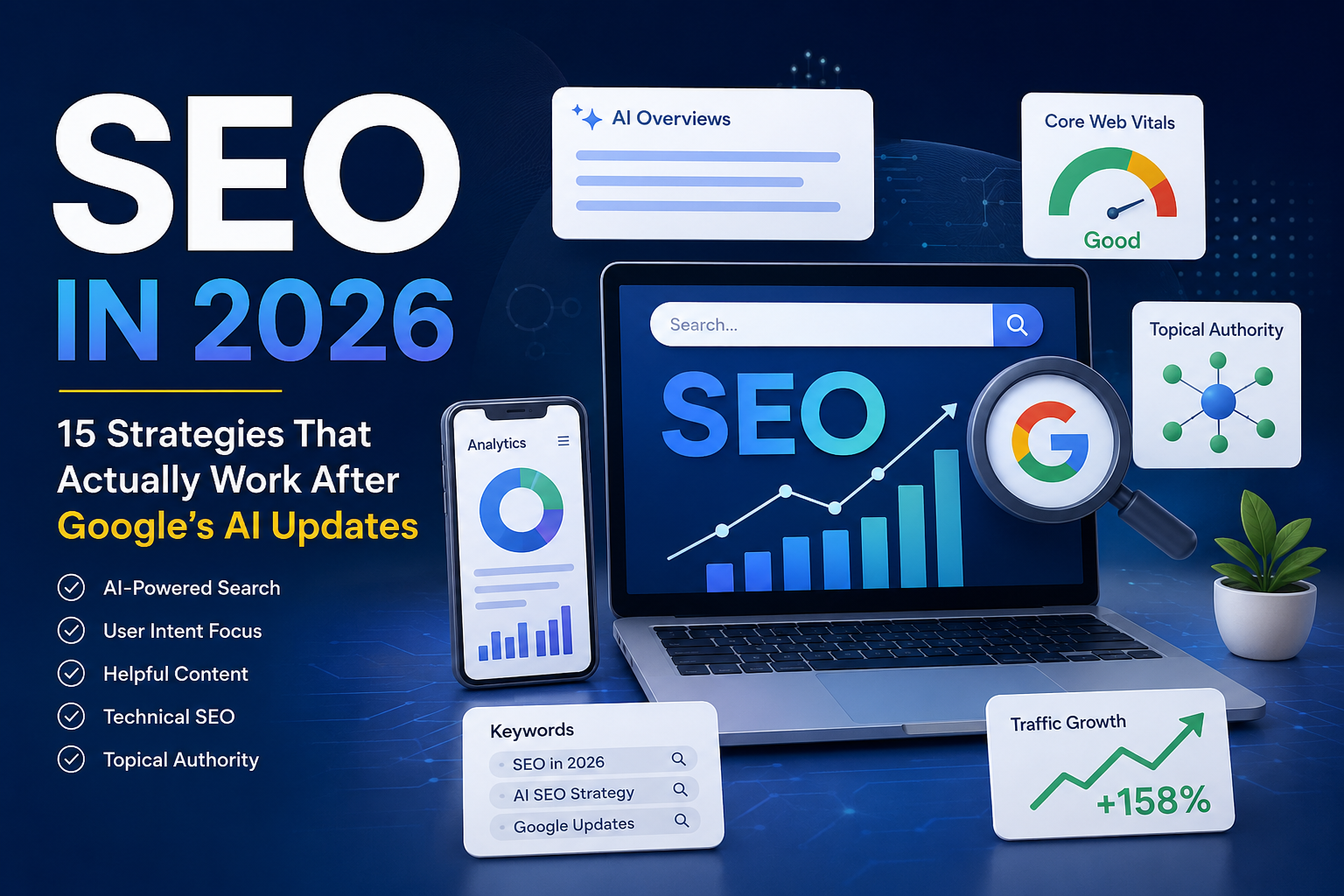
15 Strategies That Actually Work After Google’s AI Updates
Search Engine Optimization (SEO) has evolved significantly over the last few years. With Google’s AI-powered search experiences, changing algorithms, and increasing focus on user intent, simply adding keywords is no longer enough. If you want your website to rank in 2026, you need an SEO strategy that focuses on quality, expertise, user experience, and helpful content. In this guide, we’ll cover the latest SEO trends and practical strategies that can help improve your rankings. What is SEO? SEO (Search Engine Optimization) is the process of improving your website so it appears higher in search engine results like Google, Bing, and AI-powered search engines. The main objective is simple: Why SEO is More Important Than Ever Millions of websites publish content every day. Without SEO: A strong SEO strategy helps you generate long-term traffic without paying for every click. 1. Focus on Search Intent Google no longer ranks pages simply because they contain keywords. Instead, it evaluates whether your content satisfies the user’s intent. There are four primary search intents: Your content should match the reason behind the search. 2. Create Helpful Content Google’s Helpful Content System rewards articles that genuinely answer users’ questions. Instead of writing for search engines, write for people. Helpful content includes: 3. Use AI as an Assistant, Not a Replacement AI tools like ChatGPT, Gemini, and Claude can speed up content creation. However, Google still values: Use AI to draft ideas, but always edit and improve the content yourself. 4. Improve Core Web Vitals Website speed remains a major ranking factor. Improve: A faster website provides a better user experience and can improve rankings. 5. Optimize for Featured Snippets Featured snippets appear above the regular search results. Increase your chances by: 6. Build Topical Authority Instead of publishing random articles, create multiple articles around one subject. For example: SEO Google sees your website as an authority when you cover an entire topic. 7. Internal Linking Matters Link related articles together. For example: An article about keyword research should link to: Internal links help search engines understand your website structure. 8. Optimize Images Every image should include: Image SEO improves accessibility and can drive traffic from Google Images. 9. Use Structured Data Schema markup helps search engines understand your content. Useful schema types include: Rich results often improve click-through rates. 10. Build Quality Backlinks Backlinks remain one of Google’s strongest ranking signals. Earn links through: Avoid buying backlinks or using spammy link-building tactics. 11. Optimize for Voice Search People increasingly use voice assistants to search online. Optimize by: 12. Don’t Ignore Local SEO If your business serves a specific location, optimize for local searches. Examples: Keep your business information consistent across directories. 13. Refresh Old Content Updating existing articles often improves rankings faster than publishing new ones. Refresh: Google prefers fresh, relevant content. 14. Measure Performance Track important SEO metrics: Use tools like Google Search Console and Google Analytics to monitor performance. 15. Prioritize User Experience Google rewards websites that provide a smooth experience. Focus on: A great user experience encourages visitors to stay longer and engage with your content. Common SEO Mistakes to Avoid Frequently Asked Questions Is SEO still worth learning in 2026? Yes. SEO continues to be one of the most effective digital marketing strategies for generating long-term organic traffic. Can AI replace SEO? No. AI can assist with content creation, but SEO still requires strategy, technical optimization, and an understanding of user intent. How long does SEO take? SEO typically takes 3 to 6 months to show meaningful results, depending on competition and the quality of your optimization efforts. What is the biggest SEO trend in 2026? The biggest trends include AI-assisted search, user-focused content, topical authority, technical SEO improvements, and optimizing for AI-generated search experiences. Final Thoughts SEO in 2026 is no longer about chasing algorithms—it’s about creating genuinely valuable content and delivering an excellent user experience. By focusing on search intent, technical performance, topical authority, and high-quality content, you can build sustainable organic traffic that continues to grow over time. Whether you’re a business owner, blogger, or digital marketer, investing in SEO today will help you stay competitive in the rapidly evolving search landscape.