
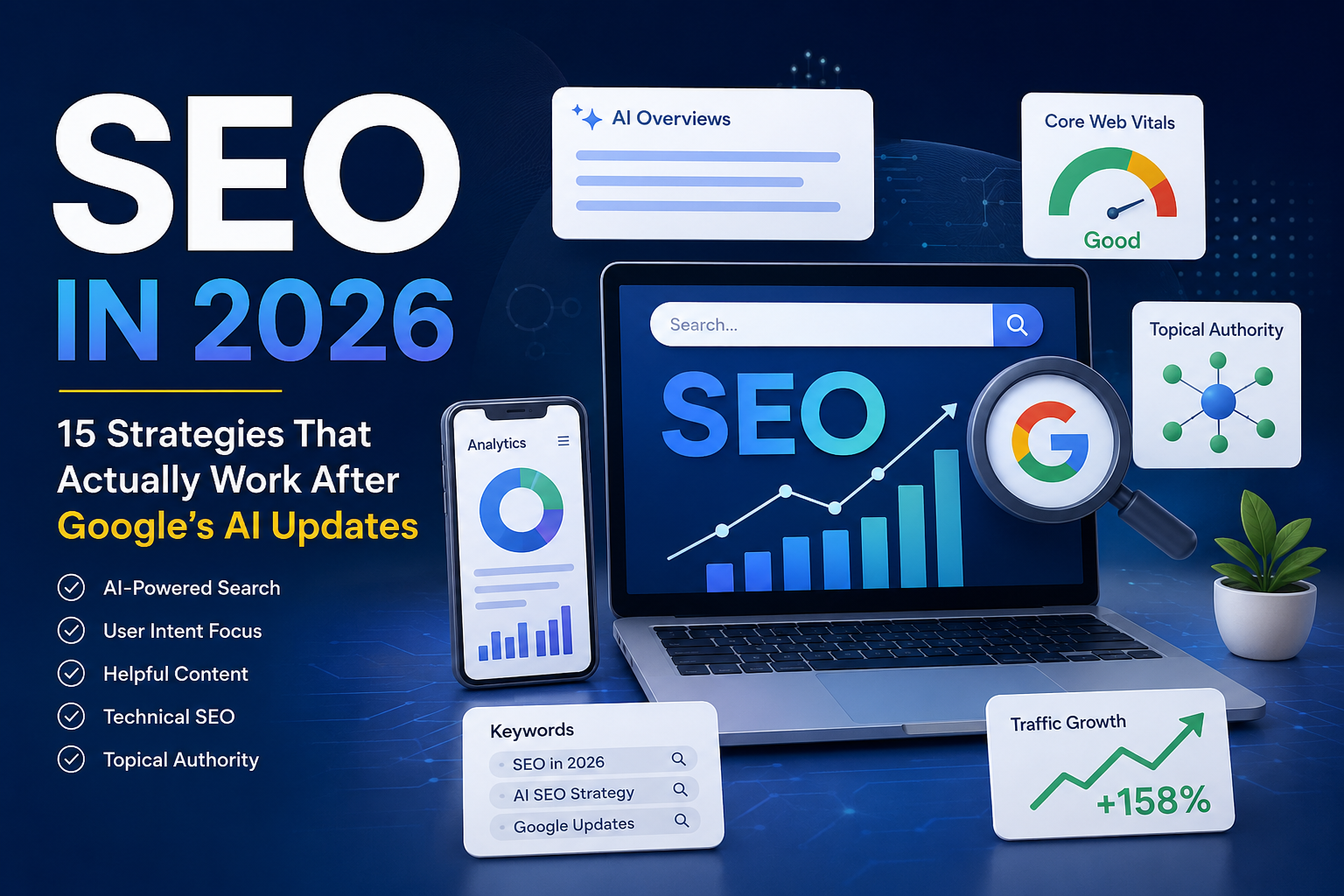
Search Engine Optimization (SEO) has evolved significantly over the last few years. With Google’s AI-powered search experiences, changing algorithms, and increasing focus on user intent, simply adding keywords is no longer enough.
If you want your website to rank in 2026, you need an SEO strategy that focuses on quality, expertise, user experience, and helpful content.
In this guide, we’ll cover the latest SEO trends and practical strategies that can help improve your rankings.
What is SEO?
SEO (Search Engine Optimization) is the process of improving your website so it appears higher in search engine results like Google, Bing, and AI-powered search engines.
The main objective is simple:
- Increase organic traffic
- Improve website visibility
- Generate quality leads
- Build brand authority
Why SEO is More Important Than Ever
Millions of websites publish content every day.
Without SEO:
- Your website stays invisible.
- You rely heavily on paid advertising.
- Competitors capture your audience.
A strong SEO strategy helps you generate long-term traffic without paying for every click.
1. Focus on Search Intent
Google no longer ranks pages simply because they contain keywords.
Instead, it evaluates whether your content satisfies the user’s intent.
There are four primary search intents:
- Informational
- Navigational
- Commercial
- Transactional
Your content should match the reason behind the search.
2. Create Helpful Content
Google’s Helpful Content System rewards articles that genuinely answer users’ questions.
Instead of writing for search engines, write for people.
Helpful content includes:
- Real examples
- Original insights
- Practical steps
- Updated information
- Expert opinions
3. Use AI as an Assistant, Not a Replacement
AI tools like ChatGPT, Gemini, and Claude can speed up content creation.
However, Google still values:
- Original research
- Personal experience
- Human expertise
- Unique examples
Use AI to draft ideas, but always edit and improve the content yourself.
4. Improve Core Web Vitals
Website speed remains a major ranking factor.
Improve:
- Loading speed
- Mobile responsiveness
- Image optimization
- Server response time
A faster website provides a better user experience and can improve rankings.
5. Optimize for Featured Snippets
Featured snippets appear above the regular search results.
Increase your chances by:
- Answering questions directly
- Using bullet points
- Adding numbered lists
- Creating FAQ sections
6. Build Topical Authority
Instead of publishing random articles, create multiple articles around one subject.
For example:
SEO
- What is SEO?
- Technical SEO
- Local SEO
- SEO Tools
- Keyword Research
- Link Building
- On-Page SEO
- Off-Page SEO
- SEO Audit
Google sees your website as an authority when you cover an entire topic.
7. Internal Linking Matters
Link related articles together.
For example:
An article about keyword research should link to:
- On-Page SEO
- Technical SEO
- SEO Audit
- Content Marketing
Internal links help search engines understand your website structure.
8. Optimize Images
Every image should include:
- Descriptive filename
- Alt text
- Compressed size
- Modern formats like WebP
Image SEO improves accessibility and can drive traffic from Google Images.
9. Use Structured Data
Schema markup helps search engines understand your content.
Useful schema types include:
- FAQ
- Article
- Breadcrumb
- Review
- How-To
Rich results often improve click-through rates.
10. Build Quality Backlinks
Backlinks remain one of Google’s strongest ranking signals.
Earn links through:
- Guest blogging
- Original research
- Case studies
- Infographics
- High-quality resources
Avoid buying backlinks or using spammy link-building tactics.
11. Optimize for Voice Search
People increasingly use voice assistants to search online.
Optimize by:
- Answering conversational questions
- Using natural language
- Including FAQ sections
- Targeting long-tail keywords
12. Don’t Ignore Local SEO
If your business serves a specific location, optimize for local searches.
Examples:
- Digital Marketing Trainer in Pune
- SEO Consultant in Pune
- Digital Marketing Classes Near Me
Keep your business information consistent across directories.
13. Refresh Old Content
Updating existing articles often improves rankings faster than publishing new ones.
Refresh:
- Statistics
- Screenshots
- Examples
- Internal links
- Outdated information
Google prefers fresh, relevant content.
14. Measure Performance
Track important SEO metrics:
- Organic Traffic
- Keyword Rankings
- Bounce Rate
- Click-Through Rate
- Conversion Rate
Use tools like Google Search Console and Google Analytics to monitor performance.
15. Prioritize User Experience
Google rewards websites that provide a smooth experience.
Focus on:
- Easy navigation
- Mobile-friendly design
- Readable typography
- Clear headings
- Fast-loading pages
A great user experience encourages visitors to stay longer and engage with your content.
Common SEO Mistakes to Avoid
- Keyword stuffing
- Duplicate content
- Slow website speed
- Poor mobile optimization
- Broken links
- Ignoring technical SEO
- Publishing AI-generated content without editing
- Not updating old articles
Frequently Asked Questions
Is SEO still worth learning in 2026?
Yes. SEO continues to be one of the most effective digital marketing strategies for generating long-term organic traffic.
Can AI replace SEO?
No. AI can assist with content creation, but SEO still requires strategy, technical optimization, and an understanding of user intent.
How long does SEO take?
SEO typically takes 3 to 6 months to show meaningful results, depending on competition and the quality of your optimization efforts.
What is the biggest SEO trend in 2026?
The biggest trends include AI-assisted search, user-focused content, topical authority, technical SEO improvements, and optimizing for AI-generated search experiences.
Final Thoughts
SEO in 2026 is no longer about chasing algorithms—it’s about creating genuinely valuable content and delivering an excellent user experience. By focusing on search intent, technical performance, topical authority, and high-quality content, you can build sustainable organic traffic that continues to grow over time.
Whether you’re a business owner, blogger, or digital marketer, investing in SEO today will help you stay competitive in the rapidly evolving search landscape.