
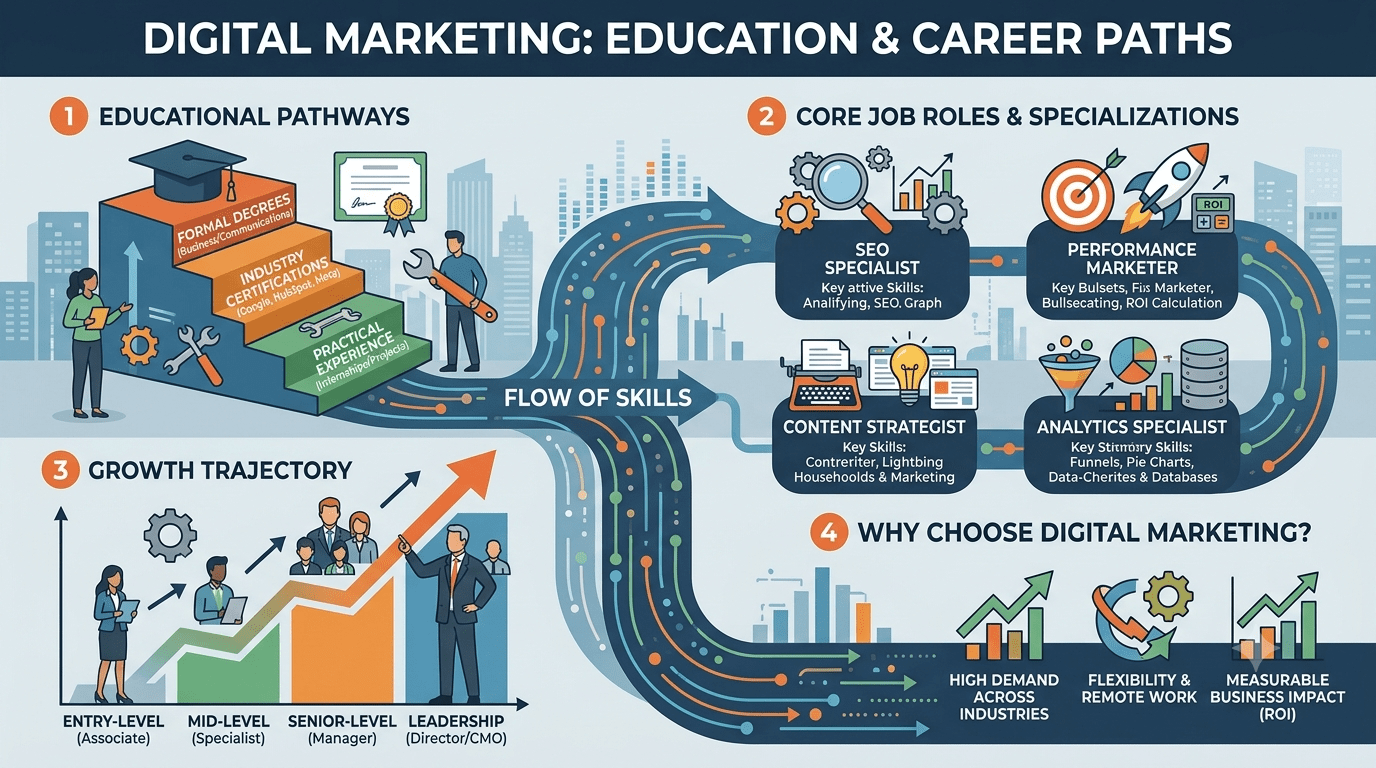
Digital marketing has evolved into an essential business engine, combining creative strategy, data analytics, and marketing technology to drive organizational growth. As companies shift budgets online, building a career in this space offers high demand, competitive compensation, and diverse specializations.
1. Educational Pathways & Essential Skills
While a specific degree is rarely a mandatory barrier, structured education and practical exposure accelerate entry and advancement.
Academic Backgrounds & Degree Tracks
- Degrees: Business Administration (BBA/MBA), Marketing, Mass Communication, Journalism, or Computer Science provide valuable foundations in consumer psychology, messaging, and web infrastructure.
- Specialized Courses: Post-graduate diplomas and intensive bootcamps bridge the gap between academic theory and real-world execution through hands-on campaign simulations.
Key Industry Certifications
Recruiters prioritize certifications that prove platform mastery:
- Google: Google Analytics 4 (GA4), Search Ads, Display Ads, and Video Certification.
- Meta: Meta Certified Digital Marketing Associate and Media Planning Professional.
- HubSpot & Inbound: Inbound Marketing, Email Marketing, and Content Marketing Certifications.
Essential Tool Stack
Building proficiency in industry-standard software is key to day-to-day execution:
- SEO & Analytics: Google Search Console, Ahrefs, SEMrush, Google Analytics 4.
- Paid Media & Automation: Meta Ads Manager, Google Ads, Mailchimp, HubSpot, Zapier.
- Content & Design: Canva, WordPress, Figma, AI-assisted content tools.
2. Core Job Roles & Specializations
Digital marketing offers specialized tracks tailored to different skill sets, from technical and analytical to purely creative.
| Career Role | Core Responsibilities | Key Skills Required |
| SEO Specialist / Search Marketer | Optimizing website structure and content to improve organic rankings and traffic. | Technical site audits, keyword clustering, link building, search intent mapping. |
| Performance Marketer / PPC Manager | Running paid ad campaigns on search and social channels with direct ROI accountability. | Budget management, A/B testing, audience targeting, ROAS optimization. |
| Content Strategist / Marketer | Planning and creating blogs, ebooks, and editorial calendars that drive organic conversions. | Copywriting, storytelling, editorial planning, CMS management. |
| Social Media & Community Manager | Overseeing brand profiles, community engagement, and short-form video strategies. | Short-form video planning (Reels/Shorts), creative direction, community building. |
| Marketing Data Analyst | Tracking user funnels, cross-channel attribution, and campaign data to optimize spending. | GA4, SQL, Looker Studio/Tableau, data visualization, conversion funnel analysis. |
3. Career Growth Trajectory
[Entry-Level: Executive/Associate] ──► [Mid-Level: Specialist/Manager] ──► [Senior: Director/Head of Growth] ──► [Leadership: CMO/CGO]- Entry-Level (0–2 Years): Digital Marketing Executive, SEO Analyst, Paid Media Associate. Focuses on campaign setup, research, content drafting, and basic weekly performance reporting.
- Mid-Level (2–5 Years): Digital Marketing Manager, Performance Marketing Lead, Content Manager. Takes ownership of channel budgets, cross-team alignment, conversion optimization, and campaign strategy.
- Senior-Level (5–10 Years): Marketing Director, Head of Growth, Digital Strategy Lead. Focuses on holistic marketing architecture, multi-channel strategy, customer acquisition cost (CAC) reduction, and revenue targets.
- Leadership Level (10+ Years): Chief Marketing Officer (CMO), Chief Growth Officer (CGO). Directs overall brand strategy, marketing technology infrastructure, executive growth plans, and high-level budget allocations.
4. Why Pursue a Career in Digital Marketing?
- High Demand Across Sectors: From tech startups and e-commerce to healthcare and finance, every industry requires an online presence and digital lead generation.
- Flexible Work Environments: High prevalence of remote, hybrid, and freelance contract options across performance, writing, and ad management disciplines.
- Measurable Value: Unlike traditional media, digital campaigns offer immediate tracking, allowing skilled marketers to prove their direct contribution to business revenue.