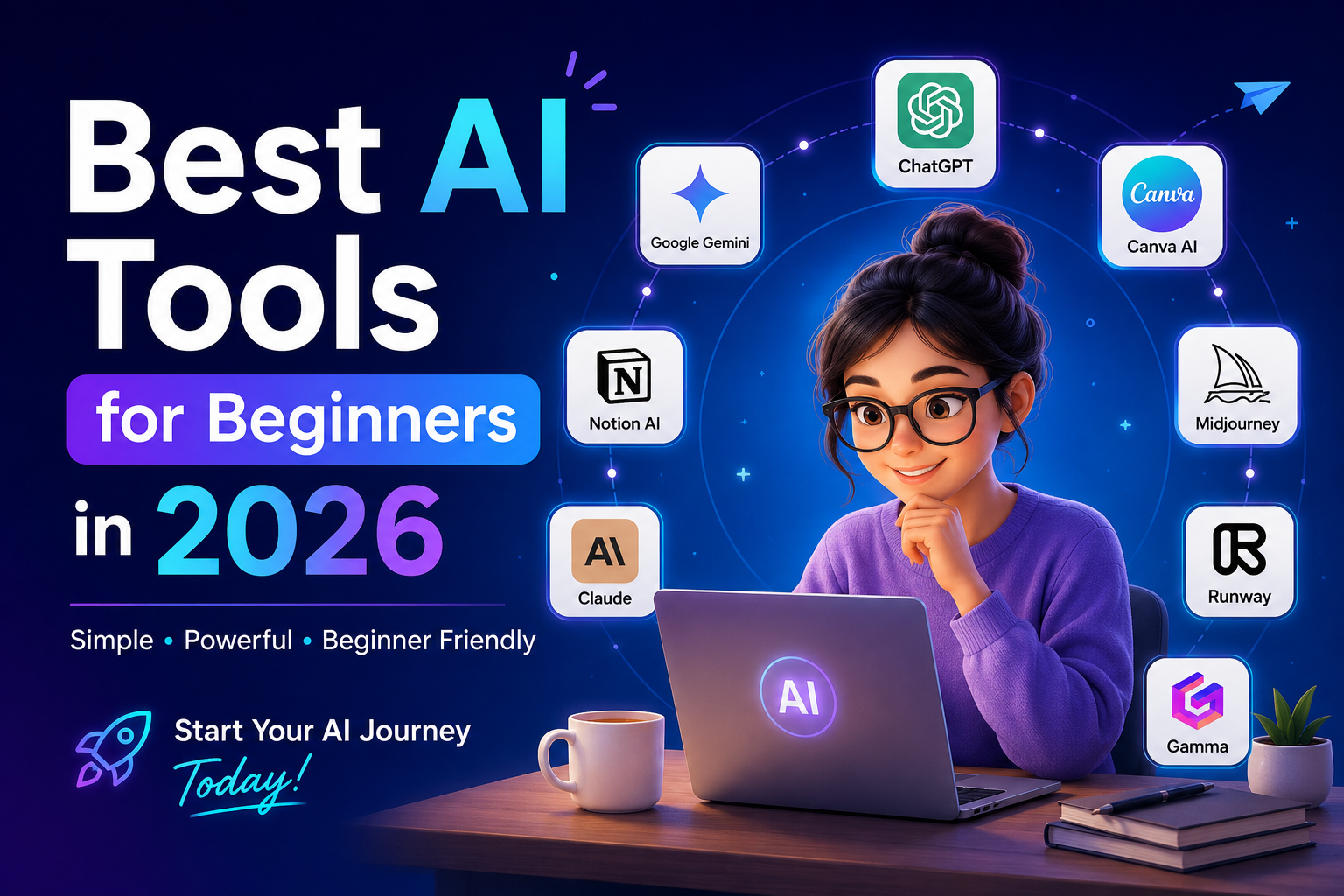
Artificial Intelligence is no longer just for developers or tech experts. In 2026, AI tools have become simple enough for students, freelancers, marketers, business owners, content creators, and even complete beginners. Whether you want to write blogs, create social media posts, design graphics, generate videos, build websites, or automate repetitive tasks, there’s an AI tool that can help. In this guide, we’ll explore the best AI tools for beginners in 2026, what they do, and why they’re worth trying. Why Beginners Should Start Using AI AI can help you: The best part? Most tools offer free plans to get started. 1. ChatGPT Best For Writing, brainstorming, coding, research, and everyday productivity. Features Pros Free Plan Yes 2. Google Gemini Best For Research and Google Workspace users. Features Pros 3. Claude AI Best For Long-form writing and document analysis. Features Why Beginners Love It Claude explains complex topics in simple language. 4. Canva AI Best For Graphic design without design skills. Features Perfect For 5. Microsoft Copilot Best For Office productivity. Features Ideal for professionals already using Microsoft Office. 6. Grammarly AI Best For Writing improvement. Features Perfect for students and professionals. 7. Notion AI Best For Note-taking and organization. Features Great for managing both personal and work projects. 8. Perplexity AI Best For Research with citations. Features Ideal for students and researchers. 9. Midjourney Best For AI image generation. Features Great for creators who want professional-quality artwork. 10. Adobe Firefly Best For Commercial image creation. Features Excellent for designers and marketers. 11. Runway ML Best For AI video editing. Features Perfect for YouTubers and content creators. 12. Pika Labs Best For Creating AI videos from text. Features 13. ElevenLabs Best For AI voice generation. Features Perfect for YouTube creators and podcasters. 14. Gamma Best For Creating presentations. Features No PowerPoint skills required. 15. Cursor AI Best For Beginner programmers. Features Makes learning programming much easier. Comparison Table Tool Best For Free Plan ChatGPT Writing & Productivity ✅ Gemini Research ✅ Claude Long Documents ✅ Canva AI Design ✅ Microsoft Copilot Office Work ✅ Grammarly Writing ✅ Notion AI Notes Limited Perplexity Research ✅ Midjourney Images ❌ Adobe Firefly Design Limited Runway Video Limited Pika AI Videos Limited ElevenLabs Voice Limited Gamma Presentations ✅ Cursor Coding ✅ Which AI Tool Should You Choose? Choose based on your needs: Students Content Creators Digital Marketers Business Owners Developers Tips for Beginners Frequently Asked Questions (FAQs) Which AI tool is easiest for beginners? ChatGPT is generally the easiest AI tool to start with because of its simple chat interface and wide range of capabilities. Are AI tools free? Many AI tools offer free plans with limited usage. Premium subscriptions unlock advanced features, higher limits, and better models. Can beginners use AI for business? Yes. AI can help with marketing, customer support, content creation, presentations, and automation, making it valuable for businesses of all sizes. Do I need coding skills to use AI tools? No. Most modern AI tools are designed with user-friendly interfaces that require little to no technical knowledge. Which AI tool is best for content creation? A combination of ChatGPT for writing, Canva AI for graphics, Runway ML for video editing, and ElevenLabs for voiceovers provides a powerful content creation workflow. Final Thoughts AI has become an essential skill in 2026, and getting started is easier than ever. Whether you’re a student, freelancer, marketer, entrepreneur, or hobbyist, these beginner-friendly tools can help you work faster, spark creativity, and automate everyday tasks. Start with ChatGPT, Canva AI, and Perplexity AI to build a strong foundation. As your confidence grows, you can explore advanced tools for image generation, video creation, coding, and business automation. By learning just a few of these tools today, you’ll be better equipped to stay productive and competitive in the AI-driven future.