
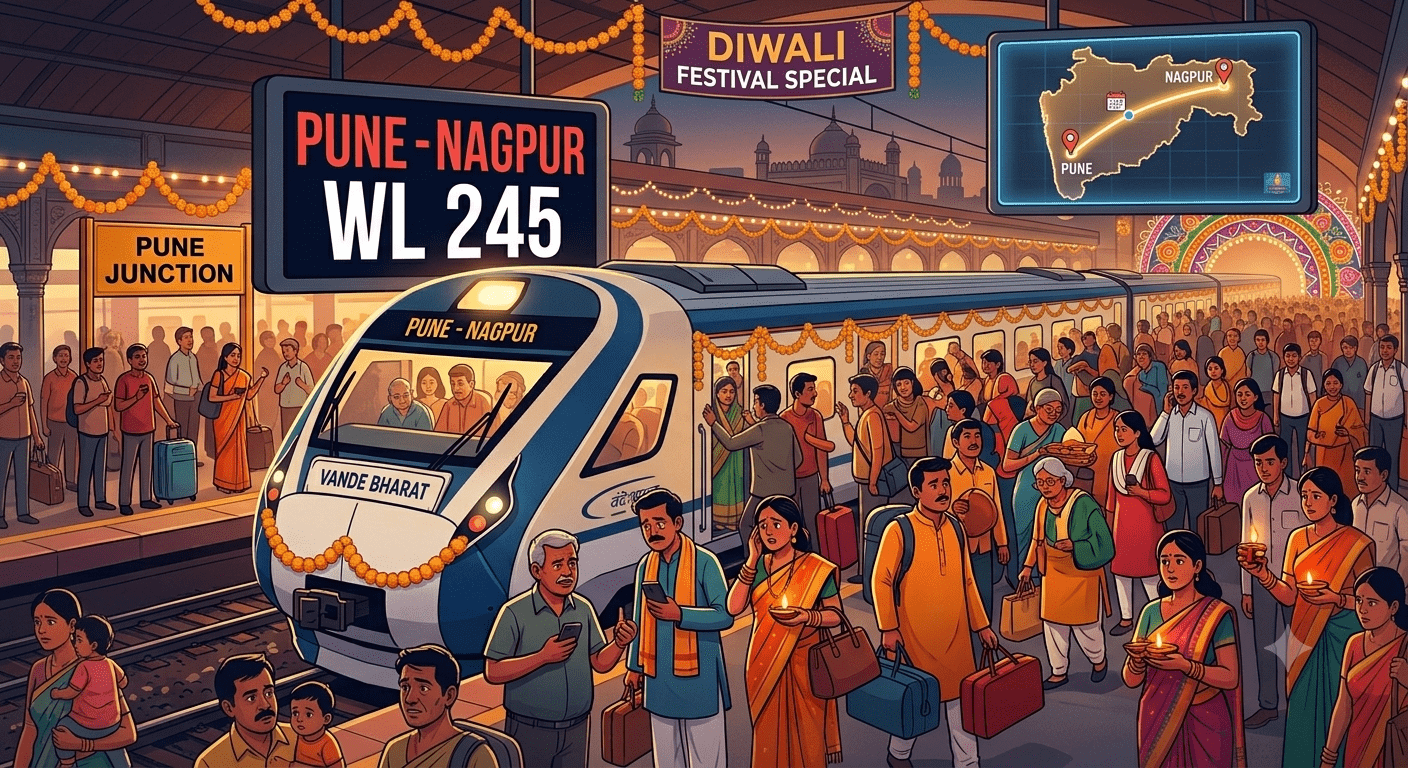
One of the biggest highlights of the festival rush is the extreme demand, resulting in waiting lists stretching well over 100 to 200 on almost all major direct train routes connecting Pune to Nagpur and the broader Vidarbha region. As Diwali approaches, thousands of passengers attempting to secure seats on trains like the Azad Hind Express, Maharashtra Express, and Garib Rath are encountering immediate waitlists or total “REGRET” status within minutes of reservation windows opening.
These massive waiting lists are currently affecting a wide cross-section of the population:
- Private sector employees: Working professionals trying to coordinate limited festival leave around rigid travel schedules.
- University students: Young scholars living in Pune’s major educational hubs needing budget-friendly travel back home.
- IT professionals: Tech workers from Hinjawadi and Kharadi IT parks returning to their hometowns in eastern Maharashtra.
- Service sector workers: Essential and hospitality staff seeking reliable transit during the short holiday period. PNG
- Families with children: Groups requiring confirmed berths to avoid the hardship of unreserved or overcrowded compartments.
- Daily commuters and festival visitors: Travelers heading to regional towns along the Pune–Wardha–Nagpur corridor.
Instead of relaxing ahead of the celebrations, travelers are facing high anxiety, constantly refreshing PNR statuses, and hunting for limited transit alternatives across various platforms.
Key Factors Driving the Route Bottleneck
The sudden and intense spike in ticket demand on the Pune–Nagpur sector is not accidental; it is driven by structural travel patterns that repeat every holiday season:
- Massive Regional Workforce & Student Base: Pune serves as Maharashtra’s primary educational hub and second-largest IT center. Tens of thousands of residents originate from Vidarbha, creating an immense, one-directional traffic surge right before major festivals.
- Severe Supply-Demand Mismatch: Daily baseline train capacity is designed for normal routines, not holiday surges. During peak Diwali days, passenger demand spikes up to five times above standard capacity, quickly exhausting available sleeper and AC berths.
- Concentrated Travel Window: Over 80% of total festival passenger movement is crammed into a tight 48- to 72-hour window immediately preceding Dhanteras and Lakshmi Puja, leaving zero margin for traffic absorption.
Central Railway Prep & Alternative Transit Options
To handle the immense passenger volume and offer relief to those stranded on triple-digit waiting lists, authorities and transport networks are deploying several measures:
- Special Holiday Trains: Central Railway routinely operates extra Diwali special trains running between Pune Junction, Nagpur, and adjoining stations. Passengers are urged to monitor official notifications for last-minute route additions.
- Optimized Tatkal Strategy: Travel experts recommend saving passenger master lists directly on the IRCTC app beforehand, allowing users to check out within seconds when the 24-hour Tatkal quota opens.
- State Transport (MSRTC) Fleets: The Maharashtra State Road Transport Corporation deploys extra bus trips at regulated fares, providing a predictable alternative to private bus operators whose prices often double during peak days.
- Multi-Leg Routing: Passengers unable to find direct bookings are opting for split journeys via intermediate junctions such as Daund, Manmad, Badnera, or Wardha to complete their trip.