
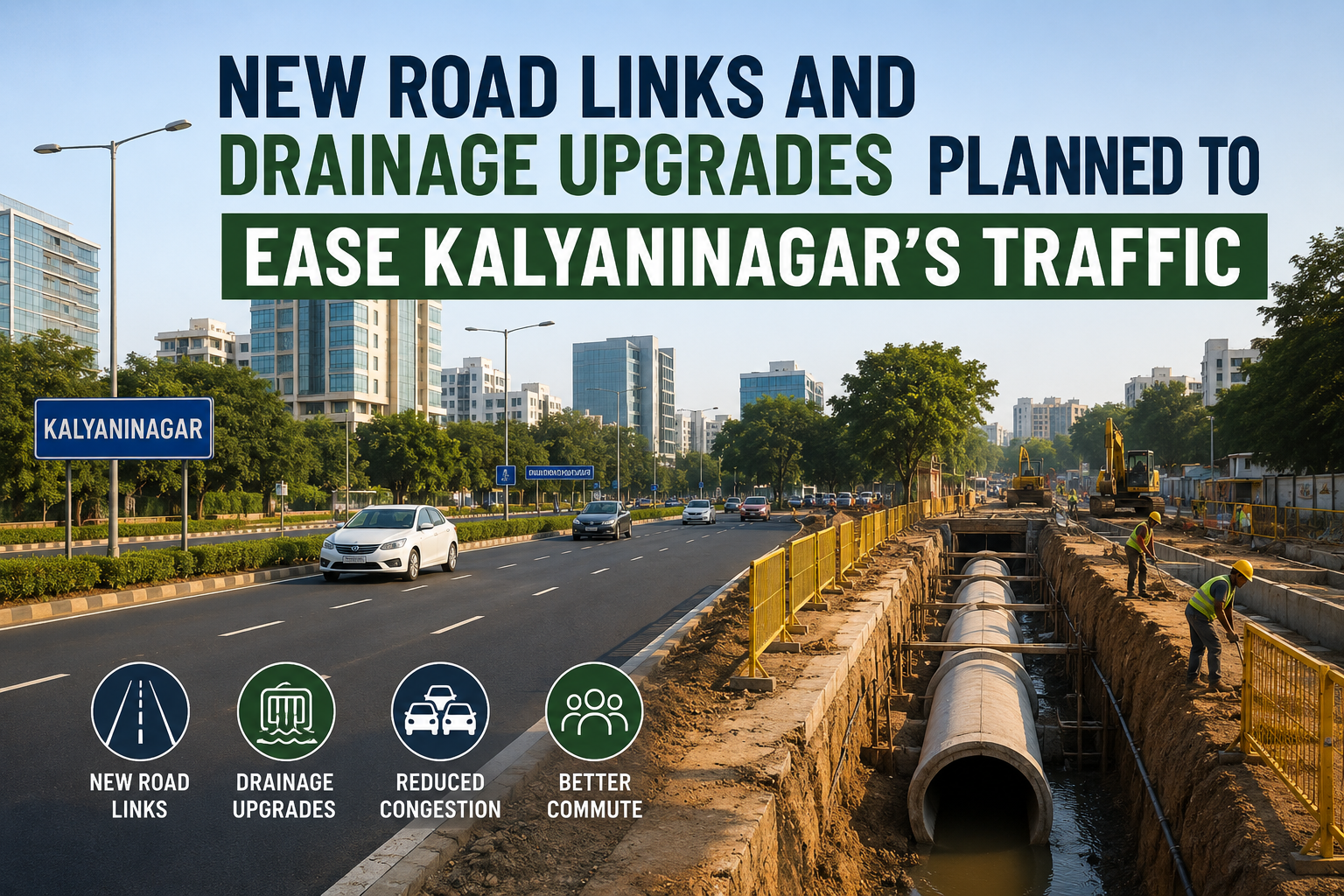
If you’ve ever driven through Kalyaninagar during rush hour, you know how frustrating the traffic can be. Long queues at intersections, slow-moving vehicles, and roads that become even more congested during the monsoon have become part of daily life for thousands of commuters. Now, there’s some good news. The Pune administration has announced plans to improve traffic flow in Kalyaninagar through a combination of new road connections and upgraded drainage infrastructure. The goal is not only to reduce congestion but also to tackle the waterlogging issues that often make commuting even more difficult during heavy rains. These improvements are expected to benefit residents, office-goers, businesses, and visitors who travel through one of Pune’s busiest neighborhoods. Why Kalyaninagar Needs Better Infrastructure Over the past decade, Kalyaninagar has grown into one of Pune’s most sought-after residential and commercial areas. The neighborhood is home to: While development has transformed the area into a thriving urban hub, road infrastructure hasn’t always kept pace with the growing number of vehicles. As a result, daily commuters often face: What’s Being Planned? The proposed project focuses on two major improvements: 1. New Road Links Authorities are planning additional road connections to improve traffic circulation and reduce pressure on existing routes. The new road links aim to: By creating more direct connections, officials hope to reduce dependency on a few heavily used roads. 2. Drainage System Upgrades Traffic isn’t the only challenge Kalyaninagar faces. Every monsoon, several roads experience waterlogging due to inadequate drainage capacity. Even moderate rainfall can slow traffic, damage roads, and inconvenience residents. The proposed drainage improvements include: Better drainage means fewer waterlogged roads, which should also help maintain smoother traffic during the rainy season. How Residents Could Benefit If implemented successfully, these upgrades could significantly improve daily life in Kalyaninagar. Some expected benefits include: Shorter Travel Times Reduced congestion means commuters may spend less time stuck in traffic. Better Road Safety Improved traffic flow can reduce sudden bottlenecks and lower the risk of accidents. Less Waterlogging Upgraded drainage systems can help keep roads usable even during heavy rainfall. Improved Property Value Infrastructure improvements often make neighborhoods more attractive for homebuyers and investors. Better Quality of Life Less time in traffic means more productive hours and reduced commuting stress. Businesses Stand to Gain Too Kalyaninagar is home to numerous restaurants, retail stores, offices, and service businesses. Improved road connectivity could: Better infrastructure often benefits both residents and businesses alike. Supporting Pune’s Growing Infrastructure The Kalyaninagar project reflects Pune’s broader efforts to modernize urban infrastructure. Across the city, authorities are investing in projects such as: Together, these initiatives aim to improve mobility while preparing Pune for future population growth. Challenges to Watch Like any major infrastructure project, execution will be key. Authorities will need to carefully manage: Residents may experience some short-term inconvenience, but successful implementation could deliver long-lasting benefits. What This Means for Kalyaninagar’s Future As Pune continues to expand, infrastructure upgrades are becoming increasingly important. Improving road connectivity and strengthening drainage systems are practical steps that can make everyday commuting safer, faster, and more reliable. For one of Pune’s busiest neighborhoods, these planned developments could mark the beginning of a more efficient and better-connected future. Final Thoughts Kalyaninagar has become one of Pune’s most vibrant residential and commercial destinations, but rapid growth has also brought infrastructure challenges. The proposed road links and drainage upgrades offer an opportunity to address two of the area’s biggest concerns—traffic congestion and monsoon waterlogging. If completed as planned, these improvements could make daily travel easier, support local businesses, and enhance the overall quality of life for residents. While commuters may need to be patient during construction, the long-term benefits could make Kalyaninagar a more accessible, resilient, and commuter-friendly neighborhood for years to come.

Maharashtra Wants to Make Pune the Next Bengaluru or Hyderabad – Here’s What It Means
Pune Could Soon Become India’s Next Innovation Capital If you’ve lived in Pune for a while, you’ve probably noticed how quickly the city has changed. New IT parks are popping up, startups are growing, the Metro is expanding, and more professionals are choosing Pune over other cities. Now, the Maharashtra Government wants to take that growth to the next level. The state has announced a long-term vision to develop the Pune Metropolitan Region (PMR) into a major innovation hub—one that can compete with technology giants like Bengaluru and Hyderabad. It’s an ambitious goal, but considering Pune’s strengths, it isn’t as unrealistic as it may sound. Why Pune? Pune has quietly built a strong foundation over the years. It’s home to some of India’s best engineering colleges, respected universities, global IT companies, automobile manufacturers, research institutions, and a rapidly growing startup ecosystem. Unlike many cities that specialize in just one industry, Pune offers a healthy mix of technology, education, manufacturing, and innovation. That’s exactly why the government believes Pune has everything needed to become the country’s next big technology destination. What Is the Government Planning? The proposed Pune Growth Hub is much bigger than building a few new IT parks. It’s a long-term plan to transform the entire Pune Metropolitan Region into a place where businesses, startups, researchers, and global companies can grow together. The focus will be on industries that are shaping the future, including: The idea is simple—create an ecosystem where innovation happens naturally and businesses have everything they need to succeed. Learning from Bengaluru and Hyderabad Whenever people talk about India’s technology industry, two cities immediately come to mind—Bengaluru and Hyderabad. Bengaluru became India’s startup capital because of its talented workforce, global technology companies, and vibrant entrepreneurial culture. Hyderabad followed with excellent infrastructure, business-friendly policies, and massive investments from multinational companies. Instead of copying these cities exactly, Maharashtra wants Pune to build its own identity while learning from what worked well elsewhere. Given Pune’s strong industrial base and educational ecosystem, the city already has a head start. Great News for Startups For entrepreneurs, this could be one of the biggest opportunities in years. A stronger innovation ecosystem usually means: If you’re building a startup in AI, SaaS, FinTech, HealthTech, or CleanTech, Pune could become one of the best places in India to grow your business. More Jobs Are on the Horizon One of the biggest benefits of this initiative is the potential for job creation. As new companies set up offices and existing businesses expand, demand is likely to increase for professionals in areas such as: This isn’t just good news for experienced professionals—it could also create exciting opportunities for fresh graduates entering the workforce. Infrastructure Will Need to Keep Up Of course, no city can become a global innovation hub without strong infrastructure. Pune has already made progress with the Metro project, new roads, and improved connectivity, but there’s still work to be done. As the city grows, improvements will also be needed in areas like: Getting these basics right will be just as important as attracting new businesses. What Does This Mean for Pune Residents? Whether you’re a student, working professional, entrepreneur, or business owner, this development could have a positive impact on your future. Students may find more internships and career opportunities. Businesses could benefit from improved infrastructure and easier access to skilled talent. Startups may receive greater support and investment. Professionals might find better-paying jobs without needing to relocate to Bengaluru or Hyderabad. In short, Pune could become an even more attractive place to live and work. Challenges Still Remain While the vision is exciting, turning it into reality won’t happen overnight. Pune still faces several challenges, including traffic congestion, rapid urbanization, infrastructure gaps, and environmental concerns. The real success of this initiative will depend on how effectively these issues are addressed while maintaining the city’s quality of life. Growth is important—but sustainable growth is even more important. Final Thoughts Pune has always been known as the “Oxford of the East,” thanks to its educational institutions and rich academic culture. Now, the city has an opportunity to earn another title—India’s next innovation capital. If the Maharashtra Government’s vision is implemented successfully, Pune could become one of the country’s leading destinations for technology, startups, research, and advanced manufacturing. For the people who call Pune home, this isn’t just another government announcement. It could be the beginning of an exciting new chapter in the city’s journey—one that creates more jobs, attracts global investment, and positions Pune among the world’s leading innovation hubs. The road ahead won’t be easy, but the destination certainly looks promising.